Showing posts with label Leprosy. Show all posts

Monday, August 21, 2023

Faith Birthing More Faith

Monday, August 21, 2023

The king of Aram had great admiration for Naaman, the commander of his army, because through him the Lord had given Aram great victories. But though Naaman was a mighty warrior, he suffered from leprosy.  At this time Aramean raiders had invaded the land of Israel, and among their captives was a young girl who had been given to Naaman’s wife as a maid.  One day the girl said to her mistress, “I wish my master would go to see the prophet in Samaria.  He would heal him of his leprosy.”  

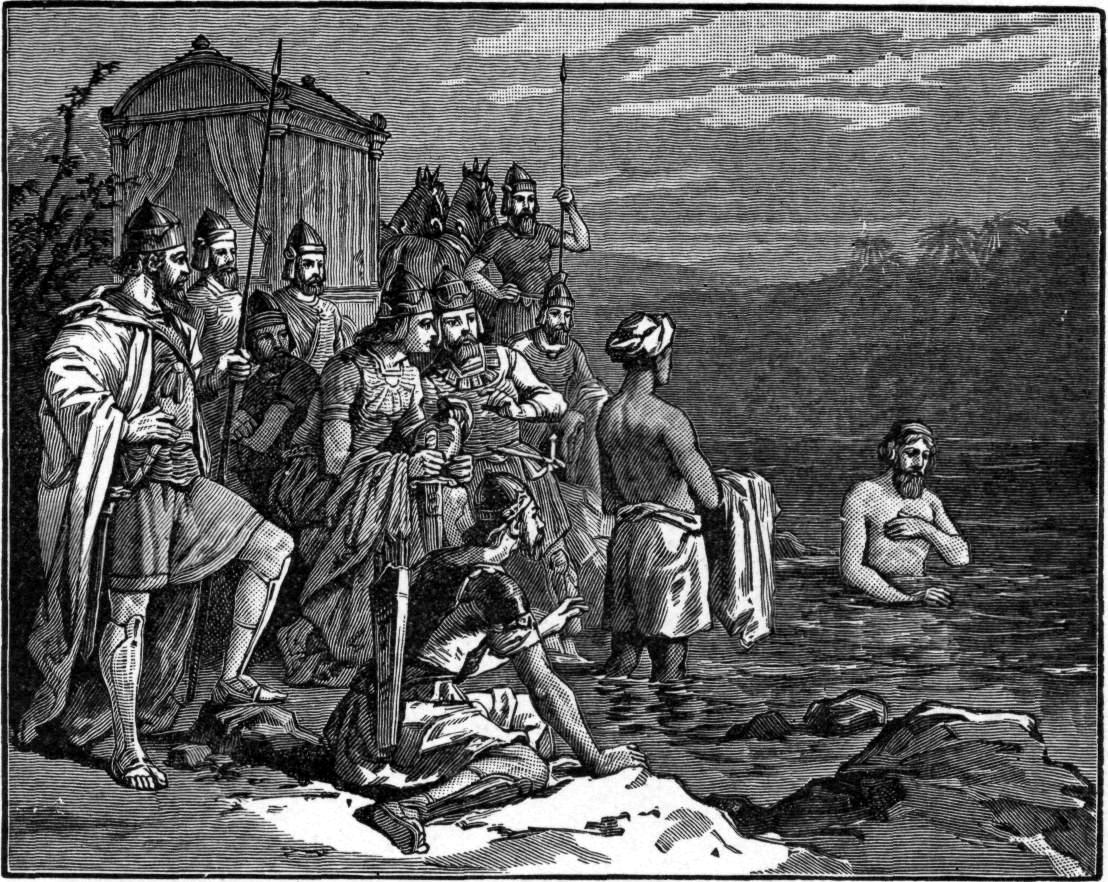
So Naaman went with his horses and chariots and waited at the door of Elisha’s house.  But Elisha sent a messenger out to him with this message: “Go and wash yourself seven times in the Jordan River.  Then your skin will be restored, and you will be healed of your leprosy.”  But Naaman became angry and stalked away. “I thought he would certainly come out to meet me!” he said. “I expected him to wave his hand over the leprosy and call on the name of the Lord his God and heal me!  Aren’t the rivers of Damascus, the Abana and the Pharpar, better than any of the rivers of Israel?  Why shouldn’t I wash in them and be healed?” So Naaman turned and went away in a rage.  But his officers tried to reason with him and said, “Sir, if the prophet had told you to do something very difficult, wouldn’t you have done it?  So you should certainly obey him when he says simply, ‘Go and wash and be cured!’”  So Naaman went down to the Jordan River and dipped himself seven times, as the man of God had instructed him.  And his skin became as healthy as the skin of a young child, and he was healed!  2 Kings 5:1-3, 9-14

This is one of those favorites in Scripture, because it has one of the most dramatic illustrations (on so many levels) of the purity and exceptional nature of faith. 

First, the servant girl, who expresses love for the master who owns her.  In compassion she wishes aloud her master would go to Elisha to be healed.  Naaman acts in faith that is clouded with expectations of a grand show of magical powers, but the prophet won’t even answer the door; he sends a servant to tell the sick man to exercise a more profound faith…go dip in the Jordan seven times! 

When Naaman’s expectations are ignored, he gets angry and, in his rage, wants to take his ball and go home.  But his servants convince him with logic…you wanted a grand show, and you got a simple request:  If it was some hard thing, you’d have done it…what’s a little dip in the muddy waters?  Naaman caves, and the healing evidence becomes history!

I love this account of Naaman’s healing because it is our story of faith in Christ.  Sin in the soul is immeasurably more damning than leprosy in the flesh.  Leprosy can kill only a temporary skin-and-bone body; sin in our immortal soul condemns our eternal being to a never-ending separation from God. 

We are all Naaman…confronted with our sinful ways, we’re faced with the decision to have faith in God by trusting in Christ’s sacrifice on the cross for our sins, or remain rotting in our chosen sinful ways. 

For You Today 

You have a choice to make, much like Naaman.  Apostle Matthew records the exact words of Jesus about this eternally-significant choice:

Don’t be afraid of those who want to kill your body; they cannot touch your soul.  Fear only God, who can destroy both soul and body in hell.  

Matthew 10:28

Hardly any advice needed on this, simply an invitation:  trust Christ now, and be forever thankful for His gift of eternal life.

You chew on that as you hit the Rocky Road; have a blessed day!

Go to VIDEO

There are about 2,600 devotional posts and 400 sermons in the Rocky Road library. 

Title Image:  via WikimediaCommons   Images without citation are in public domain.  

Unless noted, Scripture quoted from NLT©   

Monday, July 8, 2019

Legacy of Leprosy

Tuesday, July 9, 2019

“Go in peace,” Elisha said. So Naaman started home again.  But Gehazi, the servant of Elisha, the man of God, said to himself, “My master should not have let this Aramean get away without accepting any of his gifts.  As surely as the Lord lives, I will chase after him and get something from him.”  So Gehazi set off after Naaman.  When Naaman saw Gehazi running after him, he climbed down from his chariot and went to meet him.  “Is everything all right?” Naaman asked.  “Yes,” Gehazi said, “but my master has sent me to tell you that two young prophets from the hill country of Ephraim have just arrived.  He would like 75 pounds of silver and two sets of clothing to give to them.”  “By all means, take twice as much silver,” Naaman insisted.  He gave him two sets of clothing, tied up the money in two bags, and sent two of his servants to carry the gifts for Gehazi.  But when they arrived at the citadel, Gehazi took the gifts from the servants and sent the men back.  Then he went and hid the gifts inside the house.  When he went in to his master, Elisha asked him, “Where have you been, Gehazi?”  “I haven’t been anywhere,” he replied.  But Elisha asked him, “Don’t you realize that I was there in spirit when Naaman stepped down from his chariot to meet you?  Is this the time to receive money and clothing, olive groves and vineyards, sheep and cattle, and male and female servants?  Because you have done this, you and your descendants will suffer from Naaman’s leprosy forever.”  When Gehazi left the room, he was covered with leprosy; his skin was white as snow.  2 Kings 5:19-27

Naaman, commander of the most powerful army in the world awoke one day to discover he had leprosy.  He would’ve traded all his power and wealth for a good doctor’s report.  When he went to the prophet he got just that…jaundiced, sickly skin, covered in sores and scabs, bordering on rotting, was now smooth and clear.
Naaman was overjoyed and wanted to shower the prophet with gifts of gold, silver, and a lavish wardrobe.  Elisha refused, but Gehazi, his servant couldn’t resist.  He went behind the prophet’s back, running after Naaman, lying straight-faced to him, and managing to snag 150 pounds of silver for himself (worth about $36,000 in today’s money[2]).  Gehazi hid the money, but the prophet knew all about it and the tables turned very quickly. 
The upshot of the story is incredible.  Naaman, a heathen, hardened military political power broker who had every advantage except health was willing to trade it all for relief from leprosy.  He got the relief and became a worshipper of the Lord God.  Gehazi, servant of Elisha, who had seen the prophet’s connection with God as Elisha performed miracles, and who had witnessed the might of JHWH defeating the foes of Israel without so much as a skirmish, traded away his own health, and that of his children and grandchildren, not to mention the possibility of passing along a good name, for some stolen bags of silver, just enough to make a good down payment on a funeral.
The contrast of the two men is striking.  Naaman was sickly and willing to give it all away for the blessing of God.  Gehazi lived in the blessing of God and wanted what Naaman had.  He got way more than he bargained for.
For You Today
Scripture says that contentment with godliness is itself great wealth.[3]  Like Gehazi we always have a choice, we can be content and let our thoughts and lives dwell with God and His ways, or we can trade away our contentment for a little silver or gold…and leave a leprous legacy; should be a no-brainer for believers!
You chew on that as you hit the Rocky Road; have a blessed day.

Go to VIDEO


[1] Title Image:  Pixabay.com        Unless otherwise noted, Scripture used from The New Living Translation©
[2] According to Silver Market price
[3] 1 Timothy 6:6

Tuesday, February 5, 2019

Reasonable Faith

Tuesday, February 5, 2019

The king of Aram had great admiration for Naaman, the commander of his army, because through him the Lord had given Aram great victories.  But though Naaman was a mighty warrior, he suffered from leprosy.  At this time Aramean raiders had invaded the land of Israel, and among their captives was a young girl who had been given to Naaman’s wife as a maid.  One day the girl said to her mistress, “I wish my master would go to see the prophet in Samaria.  He would heal him of his leprosy.”  So Naaman told the king what the young girl from Israel had said.  “Go and visit the prophet,” the king of Aram told him.  “I will send a letter of introduction for you to take to the king of Israel.”  So Naaman started out, carrying as gifts 750 pounds of silver, 150 pounds of gold, and ten sets of clothing.  The letter to the king of Israel said:  “With this letter I present my servant Naaman.  I want you to heal him of his leprosy.”  When the king of Israel read the letter, he tore his clothes in dismay and said, “Am I God, that I can give life and take it away?  Why is this man asking me to heal someone with leprosy?  I can see that he’s just trying to pick a fight with me.”  But when Elisha, the man of God, heard that the king of Israel had torn his clothes in dismay, he sent this message to him:  “Why are you so upset?  Send Naaman to me, and he will learn that there is a true prophet here in Israel.”  So Naaman went with his horses and chariots and waited at the door of Elisha’s house.  But Elisha sent a messenger out to him with this message:  “Go and wash yourself seven times in the Jordan River.  Then your skin will be restored, and you will be healed of your leprosy.”  But Naaman became angry and stalked away.  “I thought he would certainly come out to meet me!” he said.  “I expected him to wave his hand over the leprosy and call on the name of the Lord his God and heal me!  Aren’t the rivers of Damascus, the Abana and the Pharpar, better than any of the rivers of Israel?  Why shouldn’t I wash in them and be healed?”  So Naaman turned and went away in a rage.  But his officers tried to reason with him and said, “Sir, if the prophet had told you to do something very difficult, wouldn’t you have done it? So you should certainly obey him when he says simply, ‘Go and wash and be cured!’”  So Naaman went down to the Jordan River and dipped himself seven times, as the man of God had instructed him.  And his skin became as healthy as the skin of a young child, and he was healed!  2 Kings 5:1-14(NLT)

Naaman was a powerful warrior who had leprosy, an ancient aids-like diagnosis; no matter your military prowess, this was a sentence of death.  Frantically willing to grasp at any straw of promise, Naaman carried a huge gift to the King of Israel to persuade him to pressure the prophet into healing his leprosy.  One estimate of the silver, gold and designer clothes approaches $1 million.[ii]  Healthcare has never been cheap, but that’s another story.
Naaman got healed despite himself.  If you survey the Scriptures, you’ll find that God always humbles the proud and exalts the humble.  If paying a million bucks to fend off the grim reaper wasn’t a sure thing, there was also the veiled threat that if Naaman didn’t get his request, the King of Aram, who had already defeated Israel in battle, would not be happy.  Naaman missed it entirely that you cannot buy God with gold, nor intimidate Him with your power.  I can imagine a little laugh echoing in heaven’s halls as God watches the mortal military genius flexing his leprosy-covered muscles.
Well the story displays a typical attitude of the privileged and powerful, supposing even the prophet of God would come bowing, scraping, and ready to cater to Naaman’s every wish.  It didn’t happen that way; Elisha sent his servant to the door and told the General to go take a bath in the muddy Jordan.  Dip seven times like a bobbing fish lure and see what happens.  This didn’t please Naaman at all, but his servants brought a little reason to the table, and convinced the dying, but proud man to do as the prophet had ordered.
In the end, Naaman learned a little humility can be a powerful friend; he also learned faith is not only the evidence of things not seen[iii], it is also the very substance of reason, which is doing things in God’s world the way God the Creator designed it. 
For You Today
Like Naaman, we all eventually come face to face with the truth that doing things God’s way is the only way…if you want to live! 
You chew on that as you hit the Rocky Road; have a blessed day.

Go to VIDEO


[i] Title Image:  via Wikimedia Commons
[ii] Jack Wald, Rabat International Church, in a sermon
[iii] Hebrews 11:1

Thursday, October 6, 2016

Mold, Birds, Goats & a Son

Thursday, October 6, 2016
To purify the house the priest must take two birds, a stick of cedar, some scarlet yarn, and a hyssop branch.  He will slaughter one of the birds over a clay pot filled with fresh water.  He will take the cedar stick, the hyssop branch, the scarlet yarn, and the live bird, and dip them into the blood of the slaughtered bird and into the fresh water.  Then he will sprinkle the house seven times.  When the priest has purified the house in exactly this way, he will release the live bird in the open fields outside the town.  Through this process, the priest will purify the house, and it will be ceremonially clean.    Leviticus 14:49-53(NLT)
The Levitical law is almost maddening in its nitpicking details.  Here, in the case of simple household mold, the house, to be cleansed and re-plastered, had to be spiritually-cleansed by the priest offering a sacrificial bird, and releasing a live one. 

In the annual sacrifice for sin at the temple in Jerusalem a goat was slaughtered, while a second goat was released outside the city – the scape goat.  The priest would tie a scarlet ribbon on the goat’s horn, lay his hands on its head, symbolizing the transference of sin from the people to the goat, and release it outside the city, carrying the peoples’ guilt far away from the guilty.

At God’s direction Abraham took Isaac up the mountain of sacrifice; it was a test for Abraham, God stopped him short of actually harming his son.  But the case of sacrifice for forgiveness was made, and it’s hard to forget.

Over and again in Scripture the imagery of sacrifice, forgiveness, and cleansing is repeated.  Mold, goats, birds and a son…what to make of it all?

In each case of a living animal being sacrificed to cleanse something once-encased in death’s grip was followed by a second living animal carrying the death away.  This was the sacrificial system of Israel.

So what does it mean? 

God’s desire for a close relationship with His creation (us) is short-circuited by sin.  And the problem of sin has to be addressed.  The mold (or leprosy) is a type of insidious sin, infecting every part of life.  (If you’ve ever had a mold problem, you know how hard it is to get rid of it completely).  This highlights how impossible it is for us to eliminate our sins without God’s intervention.  After all, how can you undo something in the past?

The scape-goat and scape-bird are types of God dealing with our sin problem, taking it far from us, along with punishment.  The son, Isaac, is a foreshadow of God offering His own dear Son, Jesus.  He was both the sacrifice AND the scape-goat/bird, as he rose from the grave, carrying the leprosy of our sins far away.

Listen to the words of our Easter hymn, One Day[ii]:
One day when heaven was filled with His praises,
  One day when sin was as black as could be,
Jesus came forth to be born of a virgin—
  Dwelt among men, my example is He!
Living, He loved me; dying, He saved me;
  Buried, He carried my sins far away;
Rising, He justified freely forever:
    One day He’s coming—O glorious day!

For You Today

If the well is a little dry finding ways to praise God for what He has done for you, try reading a little Leviticus.  God leaves out no detail when it comes to cleaning house!

You chew on that as you hit the Rocky Road…have a blessed day!
Go to VIDEO
NOTES

[i] Title Images: By Benyamin Reich עברית: בנימין רייך, via Wikimedia Commons
[ii] Hymnal Net  Lyrics:  John Wilbur Chapman (1859-1918), Music:  Charles Howard Marsh (1886-1956)

Thursday, October 16, 2014

A Breath Away


Friday, October 17, 2014
The king of Aram had great admiration for Naaman, the commander of his army, because through him the Lord had given Aram great victories.  But though Naaman was a mighty warrior, he suffered from leprosy.        2 Kings 5:1 (NLT)

896 B.C.

The commander of the world's most powerful and feared armed forces awoke one morning and began his regular routine of preparing for the day.  As he splashed some rose scented water over his face, his mind thought back to the recent ceremony where he had received his nation's highest honor.  What a glorious day that was, having his place assured in history, and the admiration of all those people. 
Putting on his uniform, he mused, "Who knows, maybe I could even get into politics.  After all, I've gone as far as a soldier can go.  There may be more to conquer than just some other country's armies.  Life is great," he thought – "life is exciting...hey, what's this?" he wondered aloud, as his eyes noticed a small, irregularly shaped circle of white near his elbow. 
For Naaman life was too good to entertain any thoughts of his world falling apart.  He had seen circles like that before; but his mind wouldn't allow that it could happen to him.  He could not picture himself with ugly, open sores all over his body.  He couldn't imagine what it would be like to lose those strong fingers that held his sword.  But worst of all was the unimaginable scene that flashed through his mind – of people turning away from him in disgust and loathing. 
Naaman was a handsome man, strong and virile.  The obscene thought of people treating him like he was dirty, something to be avoided...it was more than he could stand.  That could not – it would not happen to the Captain of the host of Syria's armies. 
He wouldn't let it!
For the next several weeks the spot was observed every morning.  As much as Naaman tried to tell himself that the spot wasn't growing, when that other spot on his neck appeared he began to panic.  Daily (it seemed) other spots, and small brownish red blisters formed.   Naaman lost his usual hearty appetite.  It was an easy thing to give up food, as nothing seemed to stay down for long anyway.   Long sleepless nights became his constant companion.  Lethargy was creeping into the daily routine.  Naaman no longer looked forward to planning strategic military campaigns.  He constantly felt feverish.  
There was no denying it – Naaman had leprosy.  His life was about to change…forever!

Fast-forward 2,900 years

R. B. Ward was my dear friend.  He was the chief of detectives for the Gainesville, Florida Police Department, and a member of the church I served.  He was a strong follower of Christ, and served on our leadership board.  When he joined the church I asked him, should I call you, “Captain Ward” or “R.B.”?  He said “Just Richard”.  I said, “OK, Richard, the Justified shall be Just Richard!  It became a running joke with us.  We corresponded for years after I left that church, and he always signed off, Just Richard.
In the fall of 1990 Gainesville and the University of Florida had a serial killer unleash his fury on 5 college students.  It took months and months of intensive investigation and following this trail of evil, but Danny Rolling was finally caught. 
In the middle of that all-consuming investigation my friend found out he was suffering from what the doctor described as terminal cancer of the lungs.  Aggressive chemotherapy and radiation treatments were successful, and R.B. was in remission. 
After fighting the killer loose on the streets, and the killer loose inside of him, R.B. was interviewed on a national television show.  My friend, Just Richard told the viewers this simple sentence: 
Walk with the Lord daily; 
death is only a breath away.

For You, Today


If that one single breath that separates you from meeting your Creator was going to be drawn today…what would be different about how you live this day?